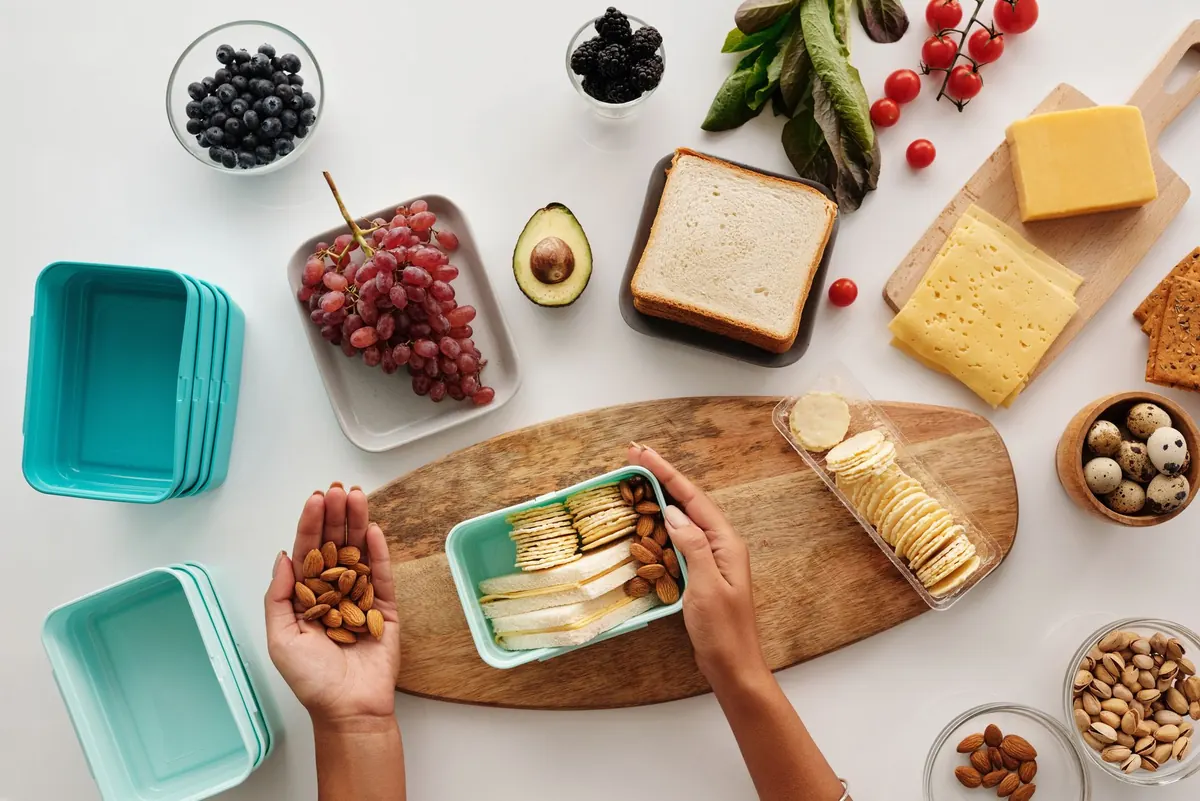
A packed lunch that sends you to the biscuit tin at three o'clock is rarely a willpower problem. It is usually a construction problem. Most meat-free lunches carried into an office are heavy on bread or plain rice and light on protein and fat, so they land quickly and fade just as quickly. Rebuilding one is not complicated. Treat every lunch as four parts — protein, fibre, healthy fat and colour — then adjust the proportions until the whole thing carries you comfortably through to dinner.
The four parts of a lunch that holds
Get the framework straight before you think about recipes. A balanced vegetarian lunch has something from each of these groups:
- Protein — eggs, dairy, tofu, tempeh, pulses, edamame. This is what keeps you full rather than merely fed.
- Fibre — whole grains, pulses, vegetables, skin-on potatoes. Slower energy, and a happier gut.
- Healthy fat — olive oil, tahini, nuts, seeds, avocado, cheese. Fat carries flavour and slows digestion, which is exactly what you want at midday.
- Colour — raw or roasted vegetables, herbs, pickles, lemon. Colour is decent shorthand for the range of vitamins and minerals you want, and it makes lunch something you look forward to.
Once you see a lunch this way, the gaps become obvious. A cheese sandwich has protein and fat but almost no fibre or colour. A big salad has colour and fibre but often no staying power. Two missing parts is a pattern, and fixing it improves the whole afternoon.
Step 1: Decide the protein first
Protein is the part vegetarian packed lunches most often get wrong, so choose it before anything else and build the rest around it. A useful rough measure is a portion about the size of your palm, or a fist-sized serving of pulses.
Options that travel well:
- two or three hard-boiled eggs, peeled and salted at the desk
- firm tofu, cubed and pan-fried with soy sauce and sesame seeds
- a tin of chickpeas, drained and tossed with oil, cumin and smoked paprika
- cooked lentils, or a generous pot of hummus
- Greek yoghurt or cottage cheese in a small jar
- edamame beans, defrosted overnight
Vegetarians generally do well to keep an eye on vitamin B12 as well, since it occurs naturally mainly in animal foods; eggs, dairy and fortified foods help, and a supplement is common advice. If you have a health condition, are pregnant, or take regular medication, speak to your GP or a registered dietitian before changing how you eat.
Step 2: Build a fibre base that isn't just bread
Wholemeal bread is a perfectly good base, but variety keeps you interested and gets more fibre in. Cook a large batch of one grain early in the week — pearl barley, bulgur wheat, wholewheat couscous, brown rice or quinoa — and keep it in the fridge for three or four days. Cold grains make excellent salads; if you do reheat them, stir through a spoonful of water first so they don't dry out.
You do not need a grain at all. Roasted vegetables with lentils, or a potato salad with a yoghurt dressing, covers the same ground. Aim for roughly half the container to be this base, and let pulses do double duty by counting towards both fibre and protein.
Step 3: Add fat, colour and crunch
Fat is where the flavour lives, and it is what stops a healthy lunch feeling like a penance. Keep it deliberate rather than incidental: a dressing of olive oil and lemon, tahini thinned with water, a spoon of pesto, half an avocado, a scatter of toasted seeds, a little feta. Dress cold grain salads while the grains are still warm, as they absorb more, and carry dressing separately for anything with leaves.
Then chase texture. Grate a carrot, slice a red pepper, add cherry tomatoes, cucumber, radishes, shredded cabbage or sugar snap peas, plus a handful of parsley, coriander or mint. Something sharp lifts everything — pickled onions, gherkins, capers, a squeeze of lemon. Something crunchy finishes it: toasted seeds, crisped chickpeas, a few nuts, or a small bag of crackers kept to one side.
Three templates to copy
The grain bowl
Barley or bulgur across half the container, a protein anchor, two or three vegetables, a spoon of dressing, seeds on top. Build it in layers in the bowl rather than packing everything separately, so every forkful has the full mix.
The upgraded sandwich
Wholemeal or sourdough, hummus or cream cheese spread edge to edge, then eggs, tofu or roasted veg, plus leaves and something pickled. If you are making it the night before, pack the salad separately and add it just before eating — a soggy sandwich is the main reason people give up on packed lunches.
The leftovers remix
Yesterday's roasted vegetables, curry or stew becomes lunch with one addition: a tin of chickpeas, a boiled egg, or a pot of yoghurt on the side. Cook once, and deliberately make a little extra.
Pack it so it still tastes good at one o'clock
- Put wet things at the bottom and dry things on top, or use separate small pots.
- Carry dressing, yoghurt and dips in a lidded jar and pour at your desk.
- Keep anything meant to stay crunchy in a bag of its own.
- Cool cooked food fully before closing the lid, or condensation will wilt everything.
- Pack it the night before. Morning decisions are where good intentions go.
One weekly habit makes all of this simpler: cook a grain, roast a tray of vegetables, boil half a dozen eggs, and mix one dressing. None of those takes long, and they can happen while you are getting on with something else. After that, assembly is genuinely a five-minute job — grain, protein, vegetables, fat, something sharp. Change the dressing and the spice and the same formula tastes different on Wednesday than it did on Monday.
Start with one lunch
Pick tomorrow's lunch and add the single component it is missing. If you usually take a sandwich, add roasted vegetables and a boiled egg. If you take a salad, add chickpe
Photo: Vanessa Loring / Pexels